
Introduction
Among the many instruments that form the vibrant world of music, the euphonium holds a special place. Its deep, rich tone, smooth melodic flow, and expressive versatility make it a favorite among brass musicians and composers. Often called the “tenor voice” of the brass family, the euphonium bridges the gap between the powerful trombone and the mellow tuba.
In this article, we will explore the euphonium’s fascinating history, its structure and sound, its role in orchestras and bands, and its presence in modern music. Whether you are a musician, a music lover, or a curious reader, this guide will help you understand why the euphonium continues to captivate audiences around the world.
1. The Origin and History of the Euphonium
The euphonium’s name comes from the Greek word euphonos, meaning “pleasant sounding” or “well-voiced.” The instrument was developed in the mid-19th century during a time of experimentation in brass design, as instrument makers sought to improve tone quality and range.
The Birth of the Euphonium
The euphonium was first invented in 1843 by Ferdinand Sommer of Weimar, Germany. His design was an improvement on earlier brass instruments such as the serpent and the ophicleide, which were known for their limited tone and range. Sommer’s new creation used piston valves, allowing for smoother transitions between notes and greater flexibility in playing complex melodies.
Around the same time, Adolphe Sax, the inventor of the saxophone, developed a similar family of instruments known as the saxhorns. The euphonium shared many design elements with Sax’s instruments but soon evolved into its own distinct voice, with a warmer tone and broader range.
The Euphonium in Military and Brass Bands
By the late 19th century, the euphonium had become a staple of military and brass bands throughout Europe. Its deep, singing sound was ideal for carrying melodic lines while blending beautifully with other brass instruments. British brass bands, in particular, adopted the euphonium as one of their core instruments, a tradition that continues today.
As bands gained popularity, so did the euphonium’s reputation. It became known not only as a supporting instrument but also as a solo voice capable of emotional and lyrical performances.
2. The Construction of the Euphonium
To appreciate the euphonium’s sound, it helps to understand how it is built. Though it may appear similar to other brass instruments at first glance, every part of the euphonium’s design contributes to its unique tone and character.
Shape and Size
The euphonium features a conical bore, meaning the tubing gradually widens from the mouthpiece to the bell. This design is what gives the instrument its signature warmth and fullness. It typically measures about 60 centimeters in height and has about 2.7 meters of tubing coiled into a compact shape.
The instrument’s bell faces upward, projecting the sound in a broad, mellow pattern. Euphoniums can be made of brass, silver, or gold-lacquered materials, each influencing the final tone quality.
Valves and Range
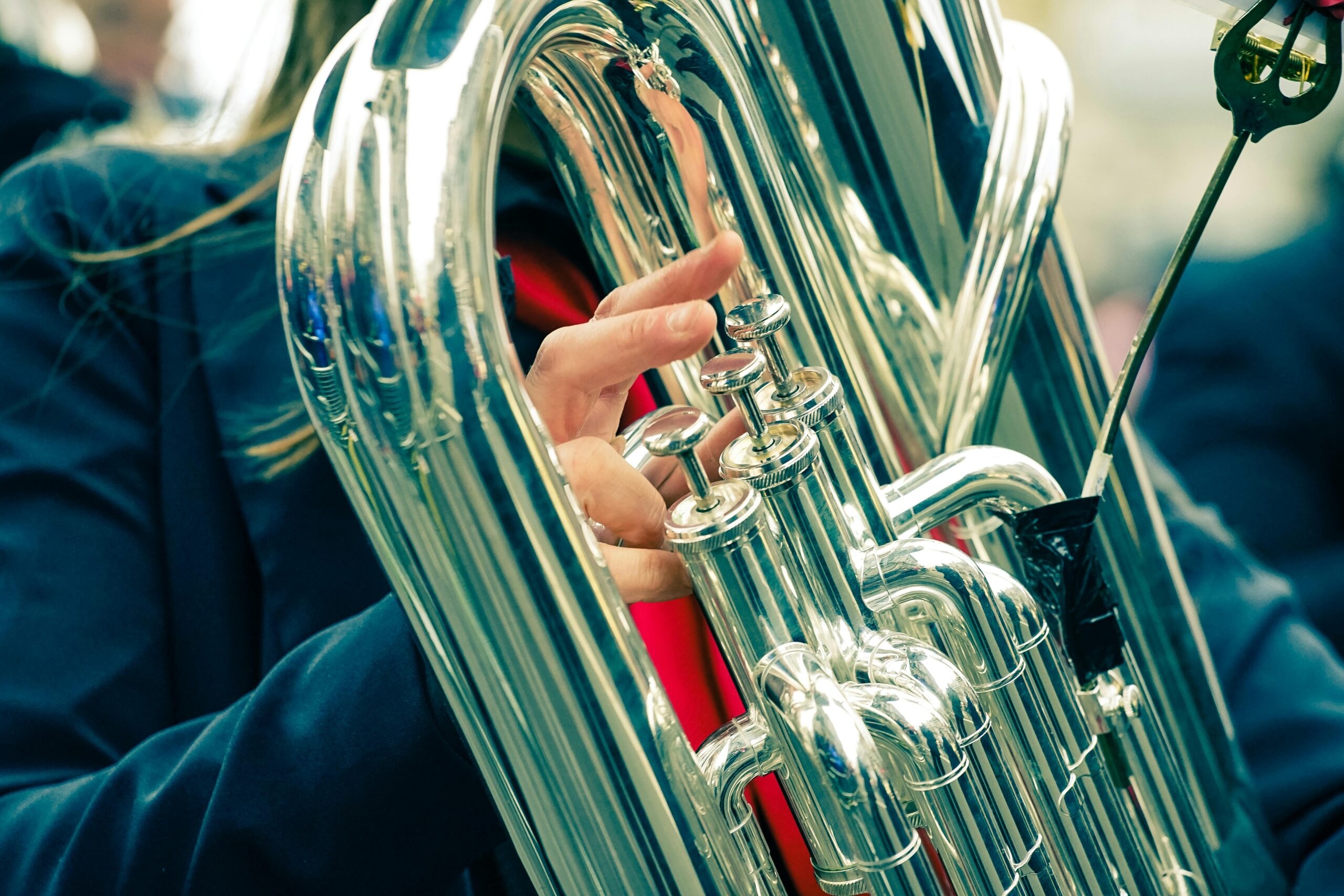
Most euphoniums have three or four piston valves. Some advanced models include a compensating system, a mechanical innovation that improves intonation in the lower register. The standard euphonium is pitched in B♭ and has a range that extends from the E below the bass clef to the B♭ above the treble clef.
The valves are operated by the player’s right hand, while the left hand supports the instrument. The mouthpiece is deep and cup-shaped, allowing for smooth airflow and flexible tone production.
3. The Sound and Playing Technique
The euphonium’s sound is one of its greatest attractions. It combines the power of a brass instrument with the expressiveness of a woodwind. Its voice can shift from gentle and lyrical to bold and commanding, depending on the music.
Tone and Timbre
The euphonium’s tone is often described as warm, velvety, and singing. It produces a sound that is less bright than a trumpet but more focused than a tuba. In the right hands, the euphonium can mimic the human voice, making it ideal for melodic solos.
Musicians achieve this rich tone through careful breath control and precise lip vibration, known as “buzzing.” The use of vibrato, achieved by subtle lip movements, adds depth and emotion to the instrument’s voice.
Playing Style
Euphonium players use similar techniques to those of other brass musicians but often require greater control of air and embouchure due to the instrument’s size. Breath support, articulation, and phrasing play crucial roles in creating a clean and expressive sound.
Soloists often perform with a sense of lyricism, shaping long, flowing lines that highlight the euphonium’s melodic potential. In ensemble settings, the player must blend seamlessly with trombones, baritones, and tubas while maintaining a distinct tonal identity.
4. The Euphonium vs. The Baritone Horn
One of the most common points of confusion for new listeners is the difference between the euphonium and the baritone horn. Although they look similar, they differ in several key ways.
-
Bore shape: The euphonium has a conical bore, while the baritone horn has a cylindrical bore. This means the euphonium’s tubing gradually widens, producing a fuller tone.
-
Tone quality: The euphonium’s sound is warmer and richer, while the baritone’s tone is brighter and more direct.
-
Role in ensembles: In brass bands, the euphonium often carries lyrical solos, while the baritone provides harmonic support.
Both instruments are valuable members of the brass family, but the euphonium’s greater expressive range often makes it the preferred solo voice.
5. The Euphonium in Classical and Band Music
While the euphonium is not as common in symphony orchestras as instruments like the trumpet or trombone, it has a respected and growing presence in both classical and contemporary music.
The Euphonium in Wind and Brass Bands
Wind ensembles and brass bands remain the euphonium’s natural home. Composers such as Gustav Holst and Percy Grainger wrote memorable parts for the instrument, highlighting its lyrical and melodic abilities.
British brass band repertoire, in particular, places the euphonium at center stage. Players like Steven Mead and David Childs have elevated euphonium performance to virtuosic levels, inspiring generations of new musicians.
Orchestral and Solo Repertoire
Although orchestral euphonium parts are rare, composers such as Richard Strauss, Gustav Holst, and Ralph Vaughan Williams have included it in their scores. The euphonium often doubles tuba or trombone parts, adding depth and warmth to the lower brass section.
Modern composers continue to explore the euphonium’s expressive range. Many have written concertos and solo works for it, expanding its repertoire and bringing it into recital halls and concert stages.
6. The Euphonium in Popular Culture and Modern Media
Beyond the classical and band worlds, the euphonium has found its way into jazz, film scores, and even popular music. Its smooth tone fits well in modern compositions that seek an emotional, human quality.
Film and Television
Film composers have used the euphonium’s rich tone to underscore emotional moments and create warmth in orchestral textures. In many movie soundtracks, its sound blends subtly with cellos and horns to produce deep, resonant harmony.
Jazz and Contemporary Music
Although rare, the euphonium has been used in jazz and fusion. Musicians such as Rich Matteson and Tommy Johnson have experimented with the instrument’s improvisational potential. Its mellow sound contrasts beautifully with sharper brass instruments, creating a unique blend in jazz ensembles.
The Euphonium in Anime and Popular Media
Interestingly, the euphonium gained renewed popularity thanks to the Japanese anime Sound! Euphonium produced by Kyoto Animation. The series follows a high school concert band and showcases the challenges and joys of euphonium players. The anime introduced a younger global audience to the instrument, increasing interest and sales worldwide.
7. Learning to Play the Euphonium
For those inspired to play, the euphonium offers both challenges and rewards.
Getting Started
Beginners typically start with a three-valve non-compensating euphonium, which is lighter and easier to manage. Students often transition to a four-valve compensating instrument as they advance.
Learning begins with understanding breath control, posture, and embouchure formation. Like all brass instruments, progress depends on consistent practice and patience.
Practice and Repertoire
Beginners work through exercises that focus on scales, tone development, and flexibility. As skill improves, players explore a vast repertoire of solos, etudes, and ensemble pieces. Classic works like Simone Mantia’s Auld Lang Syne Variations or Philip Sparke’s Pantomime are popular choices.
Professional Opportunities
Euphonium players can pursue careers in military bands, professional brass ensembles, orchestras, and teaching. With the rise of online music education and digital media, many euphonium performers also share their music through recordings and virtual concerts.
8. Notable Euphonium Players
Several musicians have defined the euphonium’s reputation through their artistry and innovation.
-
Steven Mead (United Kingdom): International soloist known for his virtuosic performances and masterclasses.
-
David Childs (Wales): Celebrated for his expressive tone and championship in contemporary euphonium repertoire.
-
Brian Bowman (United States): Renowned educator and performer who helped bring the euphonium into American concert bands.
-
Shoichiro Hokazono (Japan): Influential Japanese performer known for bridging Western and Eastern musical traditions.
These artists have expanded the instrument’s possibilities and elevated its recognition on the global stage.
9. The Euphonium’s Role in Education and Community
The euphonium plays a central role in music education programs. Schools, universities, and community bands often include euphoniums in their ensembles, offering students a chance to experience ensemble playing while developing technical and musical skills.
Because of its approachable size and rewarding tone, the euphonium is often recommended to young brass players who want to explore a versatile, expressive instrument. Many educators emphasize its importance in developing a balanced sound within a brass section.
Community and youth brass bands provide platforms for euphonium players to perform, compete, and grow. Festivals, workshops, and online communities further support learning and collaboration.
10. The Future of the Euphonium
As music continues to evolve, so too does the euphonium’s role. Advances in instrument technology have improved intonation, projection, and comfort. Meanwhile, composers are writing more works that highlight the euphonium’s lyrical capabilities, ensuring its ongoing relevance.
With growing representation in media, educational programs, and professional ensembles, the euphonium is enjoying a period of renaissance. Its voice continues to attract new audiences who appreciate its emotional depth and versatility.
Musicians who master the euphonium often describe it as an extension of their own voice—capable of expressing warmth, power, and tenderness all at once. That emotional connection ensures the instrument will remain a beloved part of musical culture for generations to come.
Conclusion
The euphonium may not always take the spotlight, but its importance within the musical world is undeniable. It serves as the soul of brass ensembles, the lyrical storyteller of concert bands, and a powerful solo instrument capable of captivating listeners.
Its history reflects a journey of innovation and artistry, from 19th-century German workshops to modern concert halls around the world. Its sound continues to inspire composers, performers, and audiences alike.
For those who take the time to listen—or better yet, to play—the euphonium offers something rare: a sound that is at once noble and intimate, strong yet tender. In the vast orchestra of human expression, it remains one of the most beautiful voices ever created.
